
Why Short-Term Thinking Is Keeping Your Trade Business Stuck in Survival Mode
There's a type of job that looks great on paper. High dollar value, fast timeline, premium client. You chase it hard, win it, and spend the next eight weeks managing a homeowner who changes their mind weekly, a GC who pays slow and argues everything, and a scope that keeps expanding without acknowledgment. Your crew is burned out by week four. You make the money, barely, and swear you'll never do it again—then take a similar call three months later because the number looks good.
That's survival mode. And it's a cycle that traps more trade businesses than any market downturn ever has.
If you are only looking at the profit margin of the job in front of your face, you are building a job, not a business. The most valuable assets in residential construction—premium builder relationships, a pristine local reputation, and consistent word-of-mouth referrals—are built over years, not weeks. The moment you start making decisions based on where you want to be in five years instead of how to maximize cash this Friday, your entire operation starts moving in a different direction. This post covers the three shifts that separate long-game players from the ones perpetually grinding for the next draw check.
Why Does a Transactional Mindset Keep Your Business in Survival Mode?
Because transactional clients cost more to serve than they pay—and the damage they do to your operation rarely shows up on the invoice.
The transactional mindset in construction is easy to recognize: take the highest-paying job available, extract the most revenue from it, move on. It feels like smart business. In practice, it produces a specific kind of exhaustion—high revenue, thin margins, burned crew, frayed relationships, and a pipeline that requires constant hustle to keep full because nothing is compounding.
The high-paying, high-drama client is the most seductive trap in the residential trades. He comes in with a big project, a big budget, and an urgency that makes your phone feel like it's ringing at exactly the right moment. What he doesn't advertise is the constant scope changes, the slow payments, the aggressive punch list, and the way he'll talk about your crew to other potential clients if anything goes sideways. You can win the job and lose your reputation in the same project.
Meanwhile, the steady builder who sends you consistent work, pays in 30 days, and communicates professionally isn't as exciting. His projects might not be the biggest line items on your revenue sheet in any given month. But across 12 months, across 24 months, that relationship generates more clean, predictable profit than three high-drama jobs combined—without the crew turnover, the collections headaches, or the emotional toll.
Here's what trading transactional thinking for long-game thinking actually changes:
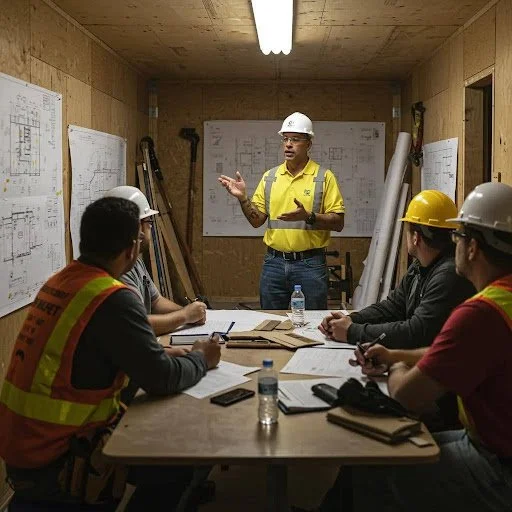
Client qualification becomes a standard practice. You stop taking every call that comes in and start asking whether the client is the right fit. How do they pay? How do they handle changes? Who else have they worked with? The answers tell you whether the relationship has long-game potential or whether it's a one-time extraction.
You protect your anchor relationships above everything else. When a high-dollar one-off conflicts with capacity you've committed to a trusted builder, the builder wins. Every time. The one-off will always find another sub. The builder relationship is not replaceable on short notice.
Your crew stops burning out. High-drama clients generate high-drama job sites. Consistent builder partners generate consistent, professional working environments. Your crew's retention, morale, and performance are directly tied to the quality of the work environment—and the quality of the work environment is directly tied to the quality of your clients.
Practical step: Look at your last 12 months of revenue and categorize every client as either a long-game partner or a transactional engagement. Then calculate the total cost of each transactional job—including slow payment, change order disputes, crew overtime, and any follow-up issues. Compare that actual margin to what you projected when you took the job. That gap is the real cost of the transactional mindset.
Why Does Doing the Right Thing When Nobody Is Watching Build Your Most Valuable Business Asset?
Because your local reputation is built entirely from moments no one is grading you on—and it outlasts any single project or client relationship by years.
Investing in your local reputation is Law #9 — Play the Long Game — applied to the market you actually operate in. In residential construction, especially at the custom home level, the market is small. GCs know each other. Homeowners talk to neighbors. Suppliers have conversations with builders. The ecosystem is tight, and your reputation circulates through it continuously whether you're managing it or not.
The question isn't whether your reputation is being built. It's whether you're building it intentionally.
Doing the right thing when it costs you money in the short term is the fastest way to build a long-game reputation. And the opportunities to do it show up constantly—most subs just don't recognize them as the investments they are.
What does this look like in practice:
Fixing a mistake without being asked. If your crew caused a problem—even a minor one, even one the GC might not have noticed—correct it before anyone brings it up. That proactive ownership is rare and remembered.
Referring work you can't take to someone you trust. When a builder calls you for a project you're booked out on, referring him to a reliable sub you'd vouch for does two things: it protects the builder's schedule and it signals that you're thinking about his interests, not just your revenue. That's a deposit in a relationship that costs you nothing.
Honoring a verbal commitment even when it's inconvenient. If you told a builder you'd have availability in six weeks and a higher-paying job comes in for the same window, honor the original commitment. Your word is your bond in a tight-knit market, and breaking it—even once—generates a story that circulates far longer than the money was worth.
Treating a homeowner with complete professionalism even when the GC isn't watching. The homeowner will tell their realtor, their neighbors, their family. The realtor will talk to other builders. The neighbors are your next potential clients. Every interaction on a residential job site is a public performance in a small theater.
The compounding effect of consistent, integrity-driven decisions across years of operation creates a market position that is genuinely difficult for a competitor to replicate. You can copy a truck wrap. You cannot copy a decade of doing the right thing.
Practical step: Identify one decision in the past 90 days where you chose short-term convenience over long-game integrity—a commitment you bent, a mistake you didn't fully own, a referral you didn't make. Now identify one decision where you chose the long game over the easy money. That contrast shows you exactly what you're building toward and what's holding you back.
What Does It Actually Mean to Build a Legacy Asset in Your Local Market?
It means building a business whose reputation, relationships, and systems make it worth more than your labor—a market position that generates value even when you step back.
Most trade businesses are not businesses. They are jobs that require the owner to show up every day. The owner is the brand, the quality control, the relationship manager, and the production supervisor simultaneously. When he's on the job, things work. When he's not, they don't. That's a ceiling, and it's the direct result of short-term thinking applied across years of operation.
The long-game alternative is a business that has been built around systems, standards, and relationships that function independently of the owner's daily presence. That's a legacy asset. And it's built through decisions that look inefficient in the short term and transformative in the long term.
Here's what long-game thinking produces over five to ten years of deliberate execution:
A reputation that generates inbound work without marketing. When your name circulates in a builder network as the reliable, professional choice for your trade, leads find you. A reputation built over years is more powerful than any advertising campaign because it comes pre-loaded with social proof.
Builder relationships that function as a recurring revenue base. Two or three anchor builder relationships, each generating $80,000 to $150,000 in annual volume, create a business foundation that doesn't require constant new client acquisition. That stability frees up your energy for growth instead of survival.
A crew and system that can operate without you on every job site. When your standards are embedded in your operation—in how your crew communicates, how they run the site, how they handle problems—the business scales beyond your personal capacity. That's when you shift from a tradesperson with employees to a business owner with an operation.
A market position that commands premium pricing permanently. The long-game player in any local residential market eventually reaches a point where his pricing is accepted without negotiation because the alternative—using a less trusted sub—is a risk no serious builder wants to take. That's the ultimate outcome of years of consistent, integrity-driven performance.
Survival mode feels urgent because the problems are immediate. The long game feels abstract because the payoff is in the future. But the tradespeople who are dominant in their local markets five years from now are making the long-game decisions today—and they're not doing it because it's easy. They're doing it because they understand what they're building toward.
Practical step: Write down where you want your business to be in five years—specific numbers, specific types of builder relationships, specific revenue and margin targets. Then audit your last 30 days of decisions. How many of them moved you toward that five-year picture? How many moved you away from it? That gap is your strategic roadmap.
The Bottom Line
Short-term thinking is not a strategy. It's a default—one that keeps trade businesses grinding indefinitely without ever building the foundation that creates real freedom.
Here's what to carry forward:
Transactional clients cost more than they pay. Qualify aggressively, protect your anchor relationships, and stop letting high-dollar one-offs burn your crew and your reputation for temporary margin.
Your local reputation is a legacy asset built in private moments. Every decision you make when nobody is grading you is either building or eroding the market position that will define your business in five years.
Long-game thinking transforms a job into a business. The relationships, systems, and reputation built through years of disciplined, integrity-driven operation eventually produce a business that generates value beyond your personal labor. That's the goal worth building toward.
Stop building a job. Start building a business. The long game is the only game that pays out at the level you're capable of.
Ready to stop surviving and start building? Download our free Job Site Code of Conduct poster for your crew trucks, or apply for Don's next Business Accelerator Workshop to learn how to make the strategic decisions that compound into a dominant, long-term trade business.
Frequently Asked Questions
How do I transition out of survival mode when I'm already buried in day-to-day operations? Start with one decision at a time. You don't exit survival mode in a single move—you exit it by making one long-game choice each week that you would have previously skipped for short-term convenience. Declining a low-quality job, investing time in a strong builder relationship, documenting a system that currently lives only in your head—each of those is a step toward the exit. Momentum builds faster than most owners expect once the pattern changes.
How do I know if a client relationship has long-game potential or if it's just transactional? Three signals: how they pay, how they communicate, and how they treat their other subs. A builder who pays in 30 days, communicates professionally, and maintains strong relationships with their trade partners is a long-game client. One who pays slow, argues every invoice, and goes through subs regularly is telling you exactly what your experience will be. Ask for references from their current trade partners and listen carefully to what you hear.
Is it ever the right call to take a high-drama, high-paying job? Yes—if it doesn't compromise your anchor relationships and your crew has the capacity to absorb the stress without affecting other projects. The mistake isn't taking a difficult job occasionally. The mistake is building a business model around them. Use high-dollar one-offs as supplemental revenue when capacity allows, not as the primary client acquisition strategy. And set clear internal criteria in advance for what makes a one-off worth taking, so the decision isn't made purely on the dollar amount.
How do I start building a local reputation if I'm relatively new to the market? Execute flawlessly on every job you have, regardless of size. A small remodel done exceptionally well generates the same type of word-of-mouth as a custom home—sometimes more, because the homeowner is more likely to know people at a similar budget level. Introduce yourself to GCs and builders professionally, do what you say, and let the work speak over time. In a tight-knit local market, a short track record of consistent execution moves faster than most new operators expect.