
Why Disciplined, Average Workers Will Out-Produce Your "Star" Tradesman Every Time
You know exactly who this post is about. He's the best craftsman on your crew—maybe the best you've ever hired. His work is genuinely exceptional when he's dialed in. The problem is you never know which version of him is showing up. Some days he's first on site, producing flawless work. Other days he rolls in 45 minutes late, has a problem with something the builder said, and spends half the afternoon making sure everyone within earshot knows about it. The rest of your crew watches. And they're learning.
Talented, undisciplined workers don't just underperform—they actively cost you. They damage crew morale, undermine your authority, and create a double standard that tells every other employee that the rules are negotiable if you're skilled enough. In residential construction, that message is a slow poison.
Law #6 — Persistence Beats Brilliance — is one of the most counterintuitive truths in the trades. The business owners who build dominant, scalable trade companies are rarely the ones with the most talented crews. They're the ones with the most disciplined crews. A team of steady, consistent workers who show up on time, follow the system, and execute without drama will out-produce a crew of talented individualists every single time—over a quarter, over a year, over a decade.
This post covers the real cost of tolerating the diva craftsman, how to build a business that runs on process rather than personality, and why relentless daily discipline is a more reliable competitive advantage than raw talent will ever be.
What Is the "Diva" Craftsman Actually Costing Your Business?
The diva craftsman costs you far more than his labor rate—he costs you the cultural authority you need to run a professional operation.
Every exception you make for a highly skilled worker sends a message to everyone else on your crew. When the star craftsman shows up late without consequence, your on-time employees register that punctuality is optional for people with leverage. When he argues with the builder and you don't address it, your crew learns that professional conduct on a job site is negotiable. When he breaks a company standard and keeps his job because you can't afford to lose his skill set, you've told your entire team that your rules only apply to the people who can't make you feel stuck.
That erosion of authority is harder to recover from than losing the craftsman entirely. And the downstream costs are specific:
Crew morale drops. Nothing demoralizes disciplined, professional workers faster than watching a colleague get away with behavior they'd never attempt. Your best people—the steady, reliable ones you actually want to build your business around—start questioning whether this is the right operation for them.
Your leadership becomes performative. When you enforce standards selectively, your standards stop being standards. They become suggestions. And a crew that treats your standards as suggestions will not perform consistently when you're off the job site.
The builder notices. The diva craftsman's behavior doesn't stay internal. It shows up in late arrivals, in attitude on the job site, in how he talks to the GC when something doesn't go his way. Builders can spot a crew culture problem from the first conversation after something goes sideways.
Replacement becomes harder over time. The longer you tolerate a diva, the more dependent on his specific skill set your business becomes—and the more his behavior gets normalized. Subs who built their business around a single talented individual find themselves in a hostage situation that limits every decision they make.
The fix is not always immediate termination. It's a direct, clear conversation about standards—followed by consistent enforcement regardless of skill level. The craftsman who can deliver exceptional work within a professional framework is an asset. The one who can only deliver it on his own terms is a liability, regardless of how good the work looks.
Practical step: Identify the highest-skill person on your current crew. Now honestly assess: does he operate within your standards consistently, or do you make exceptions for him that you wouldn't make for anyone else? If it's the latter, that double standard is the problem—and it needs to be addressed before it defines your culture.
How Do You Build a Business That Doesn't Depend on Any Single Person's Brilliance?
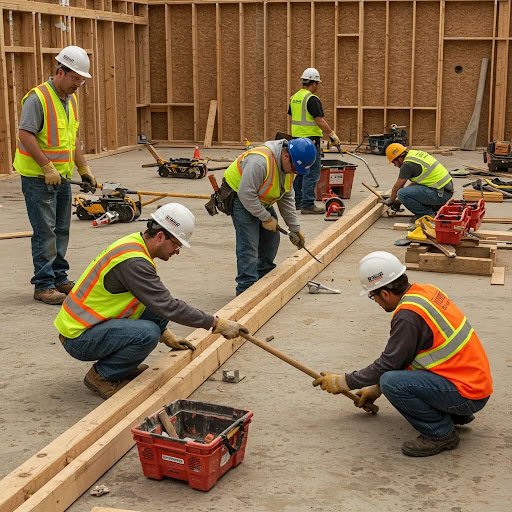
You build it on process—clear, documented, repeatable systems that produce consistent results regardless of who shows up on a given day.
The talent trap in construction is seductive because skill-dependent businesses can produce excellent work. The problem is they cannot scale, they cannot survive the loss of key personnel, and they cannot be held to a consistent standard because the standard is whatever the talented individual happens to do that day. That's not a business—that's a craft dependency.
Operationalizing consistency means building a model where the system drives the outcome, not the individual. Every top-performing trade company in any local market has this in common: their results are predictable because their processes are defined, communicated, and enforced—not because they happened to hire the right superstar.
Here's what that looks like in practice:
Document your standards explicitly. What does a clean site look like at end of day? What are the check-in protocols when a crew arrives? What's the communication process when a problem surfaces? If the answer to any of these is "however [name] does it," you don't have a standard—you have a dependency. Write it down. Make it universal.
Train to the process, not the person. When you bring a new employee on, they should be learning your system—not apprenticing under your best craftsman and absorbing his habits, good and bad. The system is the teacher. The experienced crew member reinforces it.
Evaluate performance against the standard, not against each other. When your evaluation framework is "how does this person compare to your best guy," you've made your best guy the benchmark—and inherited all his blind spots. Evaluate against your documented standards instead.
Build redundancy into critical skills. If one person leaving would create a crisis in your operation, you have a single point of failure. Cross-train. Develop multiple crew members in the skills your business depends on. Redundancy is not inefficiency—it's operational resilience.
The business that runs on process doesn't need a superstar. It needs competent, disciplined people who execute the process well. Those people are far easier to find, develop, and retain than elite craftsmen—and they produce more consistent results across more projects without the drama.
Practical step: Pick one critical process in your operation that currently lives in someone's head rather than in a written document. This week, write it down. A simple one-page checklist or protocol is enough to start. That document is the beginning of a business that can function without any single individual holding it together.
Why Does Daily Discipline Beat Raw Talent Over Any Meaningful Time Horizon?
Because talent sets a ceiling, but discipline determines whether you ever reach it—and in business, the person who shows up consistently over years always out-builds the one who performs brilliantly in bursts.
The construction industry is full of talented tradespeople who never built a lasting business. They could produce exceptional work. They could not sustain the daily grind of consistent follow-up, professional communication, accurate documentation, and disciplined operation that turns craft skill into business value. Talent without discipline produces impressive individual projects. Discipline applied consistently over years produces market dominance.
The daily habits that compound into competitive advantage are not glamorous. They're the texts returned the same day. The estimates submitted on time. The site walk-throughs completed at the end of every shift. The crew check-ins that happen every morning regardless of how busy the schedule is. None of these individually seems significant. Across 250 working days a year, across five years, they build a reputation that a brilliantly talented but inconsistent competitor cannot touch.
Here's why the grind wins in residential construction specifically:
Builders plan around reliability, not around talent peaks. A GC building his schedule needs to know when your crew will mobilize, when the work will be done, and that the quality will be consistent. He cannot build a schedule around a craftsman who performs brilliantly some weeks and inconsistently others. Disciplined, predictable execution is what gets you on the schedule—and keeps you there.
Consistent follow-up closes more business than polished pitches. The sub who follows up on every estimate, returns every call the same day, and sends a project wrap-up after every job will win more work than the one who produces impressive proposals but disappears between jobs. Persistence in business development compounds the same way it does on the job site.
Discipline protects margin through the slow periods. When the market softens or a specific builder slows down, the disciplined operation—the one with documented processes, a reliable crew, and strong builder relationships built on consistency—weathers the downturn better than the talent-dependent one. Discipline is your operational shock absorber.
It creates a culture that attracts the right people. Disciplined operations attract disciplined workers. When your standards are clear, enforced, and applied universally, the people who thrive in that environment are exactly the ones you want building your business. The ones who need exceptions to perform will self-select out.
The compound effect of daily discipline is the closest thing to a guaranteed competitive advantage that exists in the trades. It doesn't require exceptional talent. It requires showing up, following the process, and pushing forward—every day, regardless of how you feel about it.
Practical step: Identify three daily habits that, if executed without exception for the next 90 days, would have the most impact on your business—whether that's same-day estimate follow-up, end-of-day site walks, or a morning crew check-in. Commit to those three habits for 90 days and track the results. The compounding effect will be visible before the quarter is over.
The Bottom Line
Raw talent is a feature. Discipline is a foundation. And you cannot build a lasting business on features alone.
Here's what to take forward:
The diva craftsman costs more than he earns. Tolerating exceptional skill at the expense of professional standards destroys crew culture, undermines your authority, and creates a dependency that limits every business decision you make. Hold the standard for everyone.
Process beats personality at scale. Build systems that produce consistent results regardless of who's executing them. A business that depends on any single individual is not a business—it's a risk.
Discipline compounds. The daily habits that seem small individually accumulate into a reputation, a culture, and a market position that no burst of brilliance can replicate. Show up. Follow the system. Push forward. Every day.
The most dominant trade businesses in any market were not built by the most talented crews. They were built by the most disciplined ones. Decide which kind of business you're building—and then build it accordingly.
Frequently Asked Questions
How do I address a high-performing employee who consistently breaks company rules?
Have a direct, private conversation that separates your appreciation for their skill from the non-negotiable nature of your standards. Be specific about what behavior needs to change, set a clear timeline for improvement, and follow through with consequences if it doesn't. The conversation is not about their talent—it's about whether they can deliver that talent within a professional framework. Most employees respond to clear, consistent expectations. The ones who don't are showing you that the standard doesn't apply to them—and that belief will cost you more than losing them will.
How do I build a process-driven operation when everything in my business currently depends on me personally?
Start by documenting one process per week. Begin with the highest-frequency tasks—the ones you or your crew perform on every job. A simple checklist or one-page protocol is enough to start. Over 90 days, you'll have a library of documented standards that begin to replace your personal presence as the quality control mechanism. The goal isn't to remove yourself overnight—it's to systematically reduce the number of things that only work because you're there.
How do I find and hire disciplined workers when the labor market is tight?
Be explicit in your job postings about what your culture expects—punctuality, site cleanliness, communication protocols—and treat the interview as a behavioral assessment, not just a skills evaluation. Ask candidates to describe how they handle a situation when they're running late or when something on a job goes wrong. Their answers will tell you more about their discipline than any tool test. And involve your best existing crew members in the referral process—disciplined workers tend to know other disciplined workers.
Is there ever a situation where raw talent justifies bending the rules?
No—and the answer should never waver, because the moment you make one exception based on skill level, you've established the precedent. The standard either applies to everyone or it applies to no one. What you can do is invest extra time in developing a highly talented worker who needs coaching on professional conduct—structured feedback, clear expectations, defined accountability. That's different from tolerating rule-breaking because you're afraid to enforce the standard. One builds the person. The other erodes your entire operation.