
How Can the "Ten Commandments of Construction" Transform a Struggling Trade Business Into a Market Leader?
Most trade businesses fail not for lack of technical skill, but for lack of behavioral standards. You can be the most talented framer, electrician, or plumber in the county — but if your crew leaves trash on the subfloor, shows up late, and goes dark when a GC needs an update, you will always be priced like a commodity. In 2026, the market is full of people who can do the work. It is starving for people who know how to conduct the business.
Don Bronchick's Ten Commandments of Construction replaces operational chaos with a non-negotiable code of conduct governing everything from site cleanliness to client communication. It gives a trade business owner a behavioral framework that turns a group of workers into a disciplined, self-regulating unit. This post breaks down why those standards are the most direct path to higher margins, what they do to job site culture, and why the best builders in your market will pay a premium to work with contractors who live by them.
Why Do Behavioral Standards Matter More Than Technical Skill in 2026?
In today's construction market, technical proficiency is the baseline — it's what gets you on the bid list. Consistent professionalism is what gets you the job. General contractors and developers in 2026 are increasingly frustrated not by poor craftsmanship but by the friction of doing business: unreturned calls, messy sites, crews that need babysitting, and invoices that don't match the scope. The subcontractor who eliminates that friction becomes more valuable than the one who simply does good work.
When you implement a behavioral code like the Ten Commandments, you are productizing your service. You're telling the market that your work comes with a guaranteed experience — not just a finished wall or a wired panel. That reliability is what lets you escape the race to the bottom on price. Clients pay more for the certainty that your crew will follow specific protocols without being managed.
There's also a hiring advantage that most owners overlook. Technical skills can be taught. Work ethic and attention to detail are significantly harder to develop after the fact. When you hire for behavioral fit and train for technical skill, you build a more resilient workforce. A team that takes ownership of a code of conduct will catch their own mistakes — because their professional identity is tied to the standard, not just the paycheck.
How Does One Non-Negotiable Standard Change the Culture of an Entire Job Site?
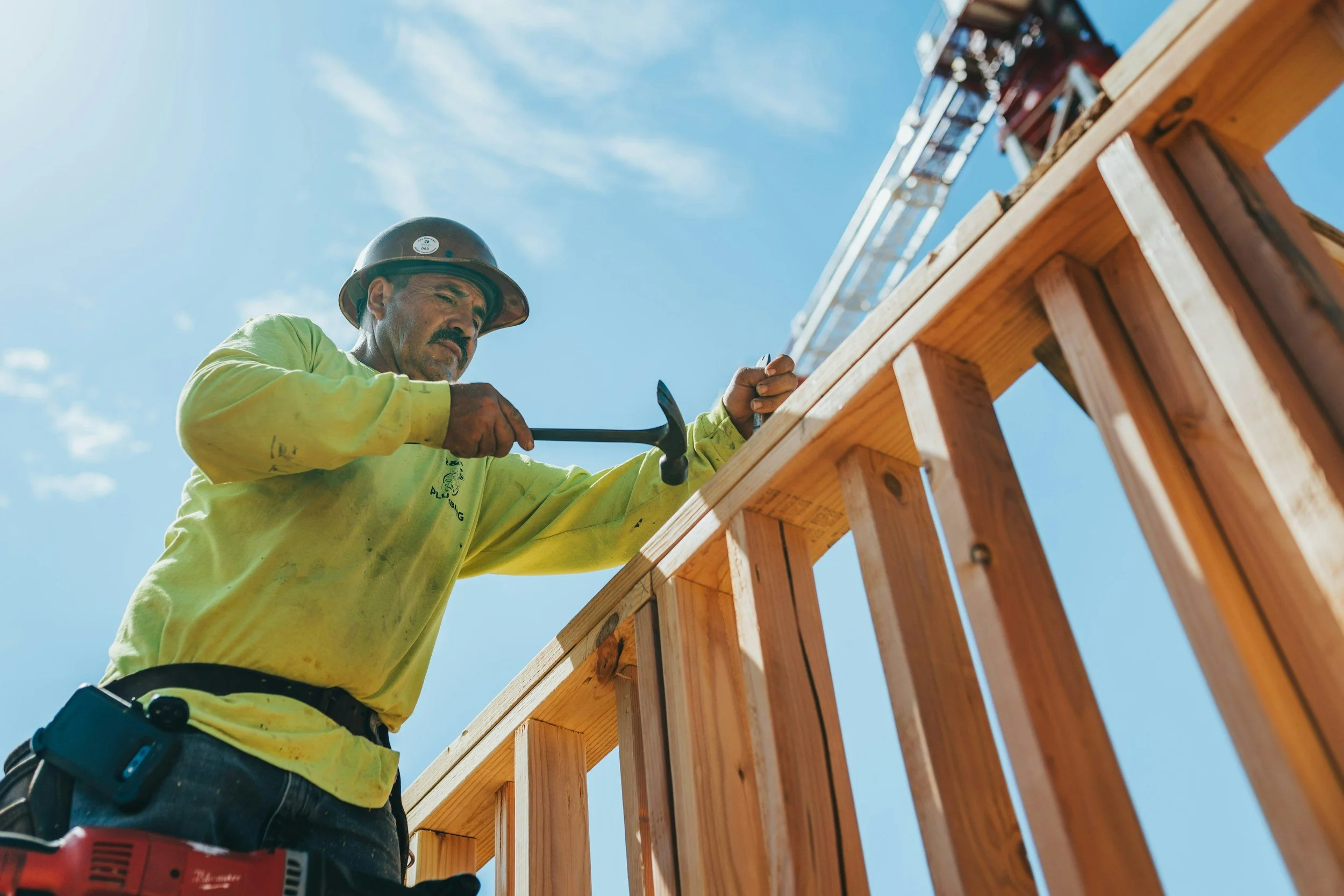
A single enforced standard — something as straightforward as "leave the site cleaner than you found it" — creates a psychological shift that raises performance across the board. When a crew maintains visible order, it signals to every other trade on the project that this is a professional environment. The inverse is equally true: one disorganized, dismissive crew drags the entire site culture down with it. Standards are contagious in both directions.
High behavioral standards also drive retention among your best people. Top-tier tradespeople are tired of working alongside crews who make their jobs harder and make the company look bad. When you enforce the Ten Commandments consistently, you create an environment where skilled workers feel respected and protected. The ambiguity that breeds interpersonal conflict on long-term projects disappears when expectations are written down and enforced equally.
The operational benefits are just as tangible. A clean, organized site is a safer site. A crew that communicates according to a clear standard makes fewer errors and generates fewer back-charges. When everyone knows exactly what is expected — regarding punctuality, equipment handling, site conduct, and daily reporting — your foremen can spend their time managing the build instead of managing behavior. That reduction in supervisory overhead directly improves your margin on every job.
What Does It Actually Take to Build a Standard That Premium Builders Will Pay More For?
Premium builders are looking for turnkey partners who solve problems rather than create them, and a trade business with a documented code of conduct is the clearest signal in the market that you are that partner. In high-end residential construction, a GC's biggest fear is a subcontractor who embarrasses them in front of a sophisticated client. Your adherence to a defined standard tells them that risk doesn't exist with your crew.
To command a premium, make your standards visible before the job starts. Include your code of conduct in your bid packages and explain in concrete terms how it saves the GC money. Show them how your daily progress reporting eliminates their need to chase you for updates. Show them how your site cleanliness standards cut their supervision hours. When a builder realizes they won't spend three hours a week managing your crew, a 10 to 15 percent premium over your cheaper competitor becomes an easy decision.
Consistency is what sustains the premium over time. Anyone can hold to a standard when the schedule is comfortable and the budget is healthy. The contractors who build lasting reputations — and the referral pipelines that come with them — are the ones who maintain their code when things get tight. That integrity becomes your most effective marketing tool. It generates a steady stream of high-margin work that never requires you to enter a bidding war.
How Does the Ten Commandments Keynote Help Associations Raise the Standard for Their Entire Membership?
Don Bronchick's Ten Commandments of Construction keynote gives association members a practical, immediately applicable toolkit — not a motivational speech. It is a tactical breakdown of the behavioral benchmarks that separate stagnant trade businesses from market leaders, delivered in a format that gives every attendee a clear next step before they leave the room. Members walk out with a one-page code of conduct they can post in their shop the following morning.
The session focuses on implementation, not just concept. Don addresses how to introduce these standards to an existing crew — including how to handle the pushback that inevitably comes from long-tenured employees who have always done things their own way. He gives owners the language and the framework to move from firefighting to building a culture that self-regulates, where lead hands enforce the standard because they believe in it, not because the owner is watching.
For the association, hosting this keynote raises the quality floor for the entire local industry. When more subcontractors in a region operate to the same professional standard, the reputation of the market improves — and so does the reputation of the association that helped them get there. It is a direct investment in the long-term profitability and sustainability of the membership, and one of the clearest demonstrations of the value an association can deliver.
Key Takeaways
Behavior is the differentiator: in a crowded market, professionalism is what separates premium contractors from commodity bids.
Non-negotiable standards reduce friction, improve morale, and cut the supervisory overhead that quietly kills margins.
Visible standards command higher prices — document and present your code of conduct as a cost-saving tool for the GC.
A culture of shared accountability lets your crew self-regulate, which is what makes scaling possible without sacrificing quality.
The Standard Bearer approach is not about being polished for its own sake. It is about operational excellence that translates directly into better clients, higher margins, and a business that doesn't depend on you being everywhere at once. Adopt the code, enforce it consistently, and stop competing on price.
Frequently Asked Questions
How do I introduce the Ten Commandments to a crew that has been operating their own way for years?
Lead with the business case, not the rulebook. Explain that higher standards attract better clients, more stable work, and better paychecks for everyone on the crew. Don't roll out all ten standards at once — start with the three most visible and impactful, such as site cleanliness, punctuality, and daily communication. Once the crew sees the effect on their work environment and client relationships, the remaining standards become much easier to introduce.
Will I lose workers if I enforce stricter behavioral standards?
You may lose the bottom tier of your workforce — the people who were already costing you money through poor attitude or sloppy work. That's not a loss. High performers actively want to work in environments where excellence is expected and enforced. Raising your standards makes your company more attractive to the tradespeople you actually want to retain and recruit.
How do I justify a higher price to a builder who's comparing my bid to a cheaper competitor?
Document your standards and quantify their value in your proposal. Show the GC a sample of your daily digital reports, photos of your organized job sites, and references from other builders who can speak to your lack of friction. When you frame your code of conduct as management savings — fewer check-in calls, no site cleanup surprises, no chasing invoices — the price premium becomes straightforward to justify.
Can these standards be maintained consistently when I'm not physically on the job site?
Yes, but only if your lead hands and project managers are empowered to enforce them — and know you will back them up when they do. Pair that with digital accountability tools: site photos, phase checklists, and daily log submissions that verify the standard is being met regardless of who is on site. The goal is a system that enforces the code, not an owner who has to be present for it to hold.