
How Do You Bridge the "Foreman-to-Leader" Gap Without Losing Your Best Technical Talent?
You promoted your best carpenter. Now he cannot get the crew to show up on time, the job is bleeding money, and you have lost both a great tradesman and a functional foreman in one move.
This is the most common leadership failure in the trades — and almost every contractor has lived through it at least once. The instinct makes sense: reward the person who does the best work by giving them more responsibility. But craftsmanship and leadership are not the same skill set, and treating them as if they are costs construction businesses millions of dollars in rework, turnover, and failed projects every year.
The good news is that the gap between technician and leader is trainable. It is not a personality trait you either have or you do not. It is a set of skills, habits, and systems that can be developed with the same rigor you bring to safety training, tool qualification, or code compliance. This post breaks down why accidental leaders fail, what technical mastery misses, and how to build the kind of internal leadership pipeline that turns your best people into your most effective managers — without destroying what made them great in the first place.
The High Cost of the "Accidental Leader" in the Trades
The accidental leader fails not because they lack talent, but because they were never given the tools to lead. They were given a title, maybe a small raise, and an expectation that their years of field experience would translate naturally into crew management. It rarely does.
The costs show up fast. Production slows because the new foreman is still trying to do the work themselves rather than directing others. Crew morale drops because the team does not feel managed — they feel ignored or micromanaged, depending on which direction the new foreman overcorrects. Turnover climbs as your experienced hands grow frustrated and your less experienced workers lose confidence.
The financial damage is direct and measurable:
Lost production: A crew operating at 70% efficiency because of poor coordination is not a field problem. It is a leadership problem.
Rework costs: Unclear communication about quality expectations creates errors that have to be fixed on your dime.
Turnover expenses: Replacing a skilled tradesperson costs between 50% and 150% of their annual salary when you account for recruiting, onboarding, and the productivity gap while a replacement gets up to speed.
The deeper cost is harder to quantify but just as damaging: when a high-performing tradesperson fails in a leadership role, you often lose them entirely. They leave because the job stopped feeling like something they were good at. You lose the employee, the institutional knowledge, and the investment you made in their technical development.
Technical Mastery vs. People Management: A 2026 Reality Check
Technical mastery answers the question "How do I do this correctly?" People management answers an entirely different question: "How do I get other people to do this correctly, consistently, even when I am not watching?" These two questions require fundamentally different thinking.
The 2026 labor market makes this gap more urgent than ever. Experienced tradespeople are in short supply. The average age of a skilled construction worker continues to rise, and the pipeline of new entrants is still catching up to demand. Every person you lose to a failed promotion is a person you will struggle to replace. And every time you pull your best technician out of the field to manage people they were not trained to lead, you are weakening both the crew and the role.
The specific skills that separate effective field leaders from skilled technicians are concrete and learnable:
Communication: Not just talking, but giving clear direction, setting expectations, and confirming understanding before work begins.
Conflict resolution: Handling crew tension quickly and directly, before small frustrations become walkoffs or safety risks.
Time and resource management: Running a look-ahead on the schedule, flagging material shortages before they become delays, sequencing work so crews are never standing around.
Accountability systems: Knowing how to hold people to standards without creating a hostile environment — and knowing when a performance conversation needs to happen today, not next week.
None of these skills are taught on a job site through osmosis. They require intentional instruction and structured practice, the same way you would not expect someone to learn electrical code by watching someone else do rough-in work for five years.
A Blueprint for Developing Internal Leadership Pipelines
The most effective leadership development in the trades happens before someone is promoted, not after. Waiting until a person has the title and the responsibility to start their leadership education is too late. The learning curve is too steep, the stakes are too high, and the failure rate is predictable.
A functional internal leadership pipeline has three distinct stages.
Stage 1: Identification. Not every skilled tradesperson wants to lead, and not every one of them should. Look for people who already demonstrate leadership behaviors informally — they explain things clearly to newer crew members, they raise production issues before they become problems, they think about the job rather than just their part of it. These are your candidates. Have a direct conversation: "We're building out a leadership development track. Would you be interested?" Get voluntary commitment before you invest.
Stage 2: Structured Development. Once candidates are identified, put them through deliberate preparation before they carry the title. Assign a mentorship relationship with an experienced foreman or superintendent. Give them low-stakes leadership responsibilities — running a morning tailgate, coordinating with a supplier, managing a two-person task — and debrief the outcome. Expose them to the financial side of the job: what a unit cost looks like, how labor hours are tracked, what a budget variance means. Leadership without business literacy is management by gut feeling.
Stage 3: Supported Transition. When the promotion happens, the development does not stop. Schedule regular check-ins — weekly for the first three months, biweekly after that. Create a feedback loop where the new foreman can flag problems before they compound. Set clear performance benchmarks: what does success look like at 30, 60, and 90 days? Recognize early wins publicly. Address early struggles privately and directly.
This is not a complicated program. It does not require a dedicated HR department or an outside training budget. It requires a senior leader who is committed to making it happen and a calendar with recurring events on it.
Why Association Leadership Programs Are the Key to Member Retention
Trade associations are sitting on an underused asset: the ability to deliver leadership development at a scale and cost that individual contractors cannot replicate on their own. This is increasingly where the conversation is heading — and for good reason.
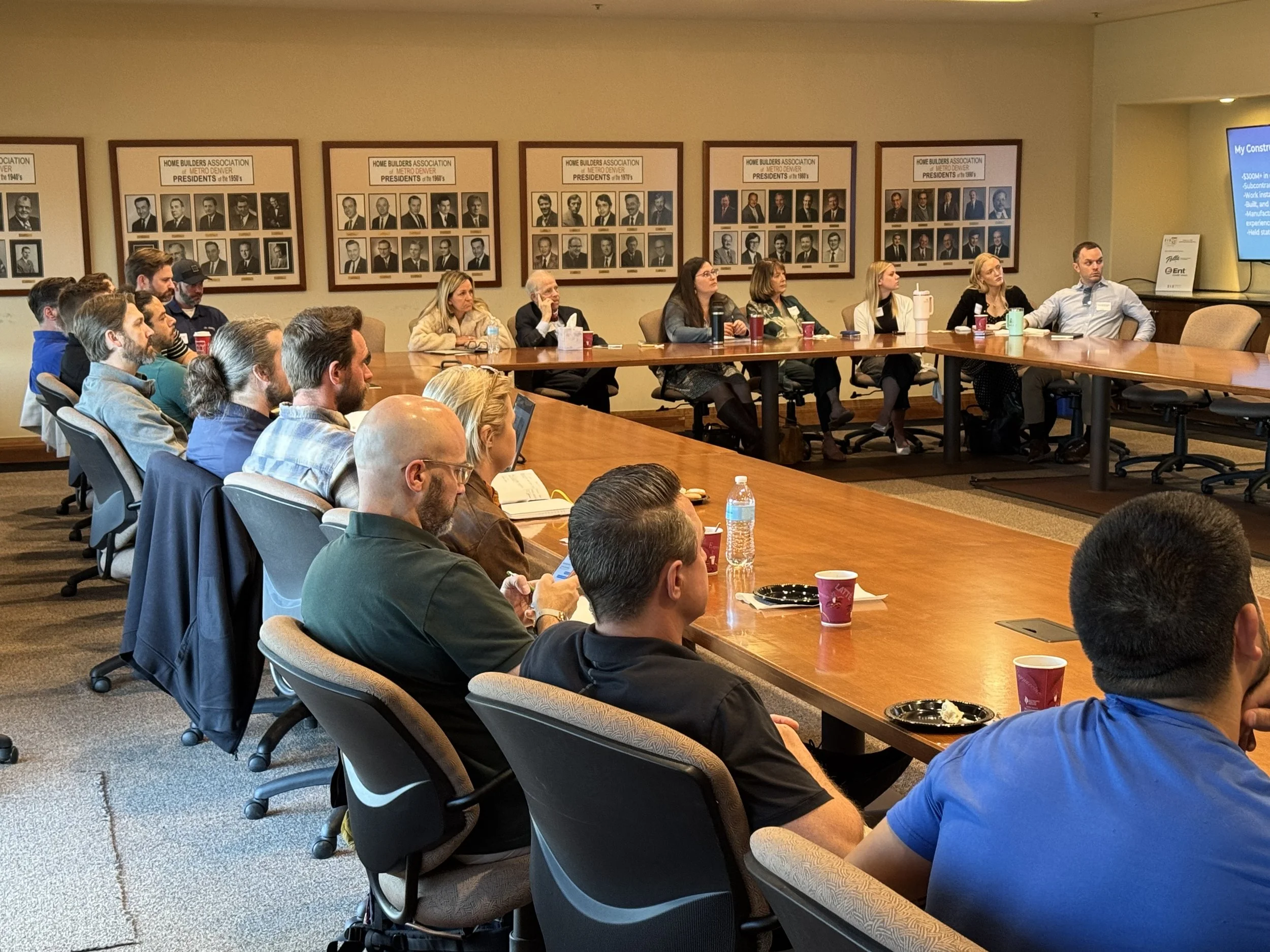
A small or mid-size contractor does not have the internal volume to run a multi-stage leadership program for one or two candidates at a time. The economics do not work. But a regional trade association that pools resources across fifty member companies suddenly has the scale to build and deliver a meaningful curriculum, bring in qualified facilitators, and create cohort-based learning environments where future foremen learn alongside their peers from other companies.
The retention impact for associations is significant. Members who see tangible return on their membership — not just networking events and newsletters, but programs that directly address their most painful operational problems — stay members. They recruit other members. They engage with the association in ways that generate additional value for everyone involved.
For individual contractors, the calculation is straightforward. A structured external leadership program gives your development candidates credibility, accountability, and a peer network they would not build inside a single company. It signals to your high-potential people that you are investing in their future, not just using their skills. That signal matters enormously for retention in a labor market where your best workers have options.
The specific program structure that works best at the association level mirrors what works internally: identification criteria, pre-promotion development, supported transition, and a feedback mechanism. The difference is that it is systematized, delivered consistently, and available to member companies who would never build it on their own.
Key Takeaways
Promoting your best technician without leadership training is not a reward — it is a setup for failure that costs you the employee and the role simultaneously.
Technical mastery and people management are distinct skill sets that require separate, intentional development.
Leadership pipelines work when they start before the promotion, not after — and when they include identification, structured development, and supported transition.
Trade associations that deliver meaningful leadership programs solve a real problem for members and create a powerful retention tool in the process.
The contractors who build the next generation of field leaders do not do it by accident. They do it by design. Start building the system now — before your next promotion decision forces the issue.
Frequently Asked Questions
What if my best tradesperson does not want to be promoted into management?
Respect that answer completely, and then ask what they do want. Not every high performer should be on a leadership track, and keeping a world-class technician in a technical role is often more valuable than forcing them into management. The goal is matching people to roles where they can succeed, not moving everyone up the same ladder.
How do I handle a new foreman who is struggling without demoralizing them?
Address it early and directly in a private setting. Frame the conversation around specific behaviors, not character: "The crew is waiting on material coordination every morning — let's talk about how to get ahead of that." Early, honest feedback delivered respectfully is far less demoralizing than letting problems compound until a public correction becomes unavoidable.
How long should a leadership development pipeline take before someone is promoted?
There is no universal timeline, but three to six months of structured pre-promotion development is a reasonable baseline for most trade environments. The goal is not a fixed duration — it is demonstrated competency in the specific leadership behaviors you have identified as critical for the role. Benchmark against outcomes, not the calendar.
What is the single most important leadership skill for a new construction foreman?
Clear communication before work begins. Most field problems — rework, delays, crew frustration — trace back to unclear or missing direction at the start of a task. A foreman who learns to set expectations explicitly, confirm understanding, and check in at key milestones will prevent more problems than any other single habit they can develop.